
How to *actually* read a supplement label
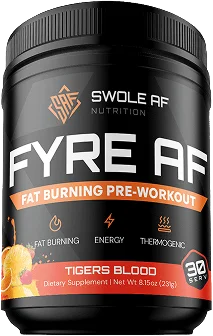
Last night I was standing in the kitchen with a tub in one hand and my phone in the other, holding the label about six inches from my nose because the type on the back of these things is microscopic and my eyes aren’t what they were at 25. lol. My youngest wandered in and asked what I was doing. I said reading. She asked reading what. Fair question.
So here’s a post I’ve been meaning to write for a while.
The back of a tub tells you almost everything you’d want to know about what you’re buying. Most people never look, and I get why. It’s tiny type in a grey box and nobody ever explains what order to read it in. So this is the order.
Start with the serving size, not the front of the tub
The front of a tub is where a brand gets to make its pitch, mine included. The panel on the back is the part that follows a set format, and that format is the same on every tub you’ll pick up.
First line of that panel is the serving size, and right under it, servings per container. Read both before you read anything else, because every number below them is per serving. Not per scoop, and not per tub.
If the panel says a serving is two scoops, and there are sixty scoops in the tub, you’ve got thirty servings. Not sixty. That one line changes your price per serving and it changes how long the tub lasts you.
I’m not saying anybody’s being sneaky. I’m saying the number on the front and the number that matters are two different numbers, and the panel is where you find the second one.
Then read the whole amount column
Under the serving size you’ll get a list, and next to each item, an amount. Milligrams, grams, micrograms.
Read all the way down, not the first two lines. What’s at the top is usually whatever made it onto the front of the tub. What’s at the bottom is the rest of what you’re taking, and it counts the same.
Percent Daily Value, and the little symbol next to the blank ones
Some rows have a percentage beside them. That’s the percent Daily Value, and it tells you how that amount compares against a standard reference intake.
Plenty of rows won’t have one. Instead you’ll see a symbol, usually a dagger, and a footnote at the bottom of the panel telling you no Daily Value has been set for it. That isn’t a red flag and it isn’t a gold star. It means there’s no official reference number to calculate a percentage against.
Worth knowing, so you don’t read a blank as a gap.
Blends
Sometimes you’ll see a bunch of ingredients bracketed together under one name, with a single total weight for the whole group.
What that gives you is the total. What it doesn’t give you is how much of each one.
Inside the group they’re listed heaviest first, so you get the running order. You don’t get the split. Could be an even spread, could be almost all of the first one and a pinch of the rest. The panel doesn’t say, and no amount of squinting will tell you.
Honestly, that’s the single most useful thing on this list. Once you know to look for the bracket, you’ll spot it everywhere.
Other Ingredients
Below the panel, in normal type, there’s a line called Other Ingredients. Flavors, sweeteners, colors, whatever stops the powder clumping, the material the capsule is made from. Listed heaviest first, same idea.
If you’re avoiding something specific, that’s your line. It’s also the one people skip, because it sits outside the box and doesn’t look like part of the panel.
The allergen line
Usually right after Other Ingredients, usually in bold. Contains milk. Contains soy. Made in a facility that also handles tree nuts.
If that matters to you, read it every time, including on something you’ve bought before. Formulas get reworked and packaging gets updated, and the label is where that turns up first.
Lot number and date
Stamped somewhere less convenient. Bottom of the tub, the crimp of a pouch, the side of a box. Usually a code and a date.
Nobody reads it and it’s more useful than it looks. It’s how one specific batch gets identified. If you ever need to ask a brand a question about the exact tub in your hand, that code is the answer to their first question.
Whose name is on it
Somewhere on the label you’ll find a company name and an address. That’s who stands behind the product.
If you can’t find one, or it’s a name with no trail behind it, that’s information too.
Those third party testing seals
Some labels carry a logo saying the product has been through an outside lab. Those are private programs. A brand chooses to take part, and pays to take part.
That isn’t a knock on them. Independent testing is a good thing and I’m glad it exists. Just know what the logo is and what it isn’t. It’s a private lab’s mark.
That sentence in the small print at the bottom
Every supplement label in the country carries the same sentence, more or less word for word. It reads: These statements have not been evaluated by the Food and Drug Administration. This product is not intended to diagnose, treat, cure, or prevent any disease.
People see that and assume it means nobody checked anything, or that the brand is hedging. It’s neither. It’s a legal requirement. If a label says a product supports something, that sentence has to appear alongside it. It’s not optional and it isn’t a confession.
What it does tell you is the category you’re in. Supplements aren’t drugs, they aren’t approved the way drugs are, and any brand telling you theirs treats a condition is telling you something it isn’t allowed to. That’s the useful part. Not the sentence itself, but what it means when a brand talks like the sentence doesn’t apply to them.
So read it once, understand it, then move on. It’s the most boring line on the label and one of the few that’s identical everywhere.
Go do this with mine
I’d rather you turn my tub around and read the back than take my word for anything on the front.
That’s the whole point of the panel. It’s the same shape on every tub in your cupboard, it’s sitting there right now, and it takes about two minutes.
Go read one.
Stay Swole, Justin 💪