
How to Choose a Pre-Workout for Women: What Actually Matters
The active ingredients in pre-workout supplements caffeine, citrulline, beta-alanine, creatine, work through the same mechanisms regardless of sex. However, what does vary, are the individual factors that affect how your body processes those compounds. Your body weight, whether you’re on hormonal birth control, your caffeine metabolism genetics, how you actually train.
First: “Women’s Pre-Workout” Is a Marketing Category, Not a Physiological One
There is no compound that works differently in women’s muscle tissue than in men’s. Caffeine blocks adenosine receptors the same way. Citrulline raises nitric oxide the same way. Beta-alanine buffers acid the same way.
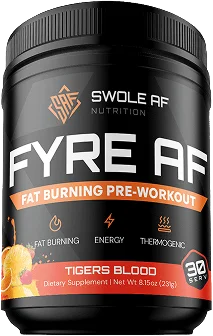
What the “women’s pre-workout” category typically offers is a lower overall dose — which is sometimes appropriate, for reasons we’ll get to — and different flavoring. The ingredients list, if you read it, is usually identical to a standard formula at a slightly reduced serving size. Sometimes at a higher price.
The variables that actually matter when choosing a pre-workout as a woman are real. They’re just not the ones on the label. They’re the ones in the sections below.
Body Weight: Why the Flat Dose Problem Hits Harder
Most pre-workout products offer a flat caffeine dose, 150 mg, 200 mg, 300 mg regardless of who’s taking it.
The International Society of Sports Nutrition’s position stand on caffeine and exercise performance — a comprehensive review of the evidence — concluded that the performance-enhancing dose is 3 to 6 mg per kilogram of body weight.
What this means in practice: a 130-pound (59 kg) person taking a 300 mg serving is already at the top of that range, and potentially over it. A 110-pound (50 kg) person is meaningfully over it. A 160-pound (73 kg) person is probably in a reasonable spot.
This is probably the single reason why pre-workout feels overstimulating for some people and unremarkable for others.
The practical fix: calculate your range. Take your weight in kilograms (pounds divided by 2.2). Multiply by 3 for the low end, by 6 for the high end. If a product’s caffeine dose puts you above that ceiling, start with half a serving.
Oral Contraceptive Use: The Caffeine Variable Nobody Talks About
Your body breaks down caffeine using an enzyme called CYP1A2. Most combined birth control pills contain a synthetic estrogen, ethinyl estradiol which slows that enzyme down. So if you’re on the pill, caffeine sticks around in your system longer than it would otherwise.
How much longer? Studies have found caffeine clearance can be roughly half as fast in people on hormonal birth control compared to those who aren’t.
In practice it means two things. First, you might need less caffeine to feel it working. Second, timing matters a lot more. Caffeine already takes five or six hours to clear your system on a normal day. Slow that down and a pre-workout you take at 4 PM can still be running the show at midnight.
None of this means you can’t use a caffeinated pre-workout on birth control. It just means your sweet spot dose is probably lower than the label assumes, and evening workouts are worth thinking twice about. Something the supplement industry has shown zero interest in putting on any label, ever.
For a deep dive on creatine see: Everything You Need to Know About Creatine Monohydrate.
Caffeine Genetics: Why Some People Feel Great and Others Feel Terrible
The gene CYP1A2 that controls how fast your body breaks down caffeine. People with the AA genotype are fast metabolizers. People with the AC or CC genotype clear it more slowly — and for them, the same dose that sharpens focus for someone else can cause anxiety, poor sleep, and actually worse performance.
A study of competitive cyclists found that AA genotype athletes improved their race times significantly after taking caffeine. CC genotype athletes on the same dose got slower.
So if you’ve ever taken a pre-workout and felt terrible. Being jittery, anxious, wired but somehow also exhausted, it may just be that your AC or CC genotype means your body doesn’t process caffeine the way the serving size assumes it does.
Now combine that with the birth control effect from the last section. If you’re both a slow metabolizer and on hormonal birth control, you’ve got two separate things working together to keep caffeine in your system longer. For that person, a low-caffeine or stimulant-free pre-workout isn’t settling. It’s actually the smarter pick.
You can find out your genotype through consumer DNA tests or sports-specific genetic panels. Or you can just notice the pattern. If caffeine at a normal dose consistently makes you feel worse rather than better, your body has already told you the answer.
Training Type: Matching Ingredients to How to Work Out
Pre-workout formulas contain multiple ingredients, and those ingredients don’t all do the same thing or benefit the same kind of training. Getting this match right matters more than getting the brand right.
For Strength Training and Lifting
Citrulline malate has a reasonably solid evidence base here specifically. A 2021 meta-analysis found that 8 grams of citrulline malate taken before resistance training significantly increased repetitions to failure across multiple sets – if you’re training for hypertrophy, this is where growth happens. A separate systematic review found it reduced perceived exertion and muscle soreness 24 hours after training. The research-supported dose is 8 grams of citrulline malate, or 3 to 4 grams of pure L-citrulline. Many products include it at 4 grams or less, which appears to be below the effective threshold.
Creatine monohydrate is the most evidence-backed strength supplement available — decades of research, consistent effect on power output. The caveat: the research-supported daily dose is 3 to 5 grams. Many pre-workouts include creatine as a label feature at 1 to 2 grams. If creatine is a priority, verify the dose or supplement it separately.
For HIIT, Conditioning, and Hybrid Training
Beta-alanine increases muscle carnosine, which buffers the acid buildup that causes fatigue during sustained high-intensity efforts lasting roughly 1 to 4 minutes — hard intervals, conditioning circuits, HYROX-style training. The evidence for it is specific to that window. For longer steady-state cardio or fully rested strength sets, the benefit is weaker.
It causes a tingling sensation called paresthesia. Harmless, fades with regular use, and surprising enough the first time that many people google it mid-workout. Worth knowing in advance.
For this training style, electrolyte inclusion matters more than it does for lifting. Sweat losses during sustained conditioning are higher, and even mild dehydration measurably impairs performance. A formula that includes sodium, potassium, and magnesium is doing something useful here.
For Endurance Training
Citrulline’s evidence for endurance exercise is considerably weaker. A 2023 meta-analysis in the Journal of the International Society of Sports Nutrition and a 2025 randomized controlled trial in Frontiers in Sports and Active Living both found no meaningful improvement in endurance performance from citrulline supplementation. If your training is primarily aerobic — long runs, cycling, sustained cardio — citrulline is not a differentiating ingredient. Caffeine remains relevant; the rest of the typical pre-workout stack is mostly decorative.
What to Avoid: Proprietary Blends and Label Features That Don’t Perform
A proprietary blend lists multiple ingredients under a single total weight without disclosing individual doses. You might see “Performance Matrix: 7,500 mg” followed by eight compounds. But, you have no idea if the citrulline is 6 grams or 600 mg.
This matters because the research-supported doses are specific. Citrulline at 2 grams is not the same thing as citrulline at 8 grams. A company confident in its formulation has every reason to disclose doses. A company using a proprietary blend is, at minimum, making it impossible to verify their product against the evidence.
Thermogenic stacks are a different conversation. Some of the compounds in these blends, things like green tea extract, capsaicin, and synephrine , do have research behind them for fat oxidation and energy expenditure, and if that’s a goal alongside performance, they’re worth looking into on their own terms. The issue is when they’re bundled into a pre-workout without disclosed doses, which makes it impossible to know if you’re getting an effective amount of anything. A thermogenic you can evaluate is a different product than one hiding behind a proprietary blend.
A Practical Checklist for Choosing a Pre-Workout
1. Calculate your caffeine range
Weight in kg (pounds / 2.2), multiplied by 3 and 6. That’s your evidence-based window. If you’re on hormonal birth control with ethinyl estradiol, or if caffeine reliably makes you feel worse rather than better, start at the low end or below it.
2. Check for disclosed doses
If the product uses a proprietary blend, you cannot verify the formula. Move on, or accept that you’re buying a label rather than a measured product.
3. Match ingredients to your training type
Citrulline malate at 8 g is relevant if you lift or do high-intensity intervals. Less relevant for endurance training. Beta-alanine is useful for sustained high-intensity efforts. Creatine is worth having only if dosed at 3 to 5 g. Caffeine applies to everything — with the caveats above.
4. Start at half a serving
Most serving sizes were calibrated for a higher body weight and higher caffeine tolerance than many women start with. Half a serving is a legitimate starting point. Adjust up from there based on how you actually feel, not on what the serving size says.
5. Notice what happens to your sleep
Track it directly for a week. If you’re consistently having trouble falling asleep or waking up feeling unrecovered, the caffeine timing is the most likely culprit — especially if you’re on OCs or are a slow metabolizer. Move the training earlier, reduce the dose, or switch to a stimulant-free formula for afternoon sessions.
Frequently Asked Questions
Is there really no difference between men’s and women’s pre-workout?
Not a meaningful physiological one. The active ingredients work through the same mechanisms regardless of sex. Products marketed as “for women” are typically lower-dosed or differently flavored versions of standard formulas — sometimes appropriate, but not for the reasons implied by the marketing. The variables that actually affect your choice are body weight, contraceptive use, caffeine genetics, and training type.
Does being on birth control change how pre-workout affects you?
It can, specifically for the caffeine component. Ethinyl estradiol, present in most combined oral contraceptive pills, inhibits CYP1A2 — the enzyme responsible for roughly 95% of caffeine clearance. Research suggests OC users clear caffeine significantly more slowly than non-users, meaning the same dose stays in your system longer. Practical effects: you may need a lower dose, and afternoon or evening pre-workout use is more likely to affect your sleep.
What caffeine dose is right for me?
The research-supported range is 3 to 6 mg per kilogram of body weight. Divide your weight in pounds by 2.2 to get kilograms, then multiply. If you’re on hormonal birth control with ethinyl estradiol or if caffeine consistently makes you feel anxious or worse rather than better, start at the lower end — or consider a stimulant-free formula.
Does citrulline malate actually work?
For resistance training — specifically adding reps across multiple high-intensity sets — yes, at 8 grams. For endurance training, the current evidence does not support a meaningful benefit. Many products underdose it; many hide the dose in a proprietary blend. If it’s not disclosed, assume it’s insufficient.
What if caffeine always makes me feel terrible no matter what?
This is likely a genuine biological response rather than a tolerance issue. CYP1A2 slow metabolizers process caffeine significantly more slowly, and in some research, high doses actually impair their performance rather than improving it. If you’re also on oral contraceptives containing ethinyl estradiol, the effect compounds. Stimulant-free pre-workouts built around citrulline, beta-alanine, and electrolytes are a real and well-supported option — not a compromise.
Final Thoughts
The honest version of choosing a pre-workout as a woman is this: the label is mostly noise. The photo of the athlete. The color of the powder. The name that implies the formula was engineered for your specific situation. These are not the variables that matter.
The variables that matter are the ones this guide covered. Body weight, because dose per kilogram is how the research works and most products don’t account for it. Oral contraceptive use, because ethinyl estradiol genuinely changes how your body handles caffeine and no one on a supplement label will tell you this. Caffeine genetics, because some people are wired to feel worse on standard doses and pushing through it is not the answer. Training type, because citrulline that works for lifting doesn’t work for running and beta-alanine that works for intervals doesn’t do much for max-effort sets.
Start with the math on caffeine. Choose a product with disclosed doses. Match the ingredients to how you train. Start at half a serving. Pay attention to your sleep.
That’s the whole thing. It is less exciting than the label. It is also how it actually works.
Read More:
- The unwritten rules of the gym floor
- What to do with Crystalized Egg Whites in the kitchen
- I don’t take a pre-workout before every session
- Where everything sits in my day
- What actually matters when you start lifting
Citations to link to primary sources:
- ISSN caffeine position stand (2021): pubmed.ncbi.nlm.nih.gov/33388079
- OC / CYP1A2 / tizanidine study showing 2.8x caffeine ratio (Granfors et al., 2005): pubmed.ncbi.nlm.nih.gov/16198659
- JMU cycling study — OCS and caffeine metabolism: commons.lib.jmu.edu/master201019/477
- NCBI Bookshelf caffeine pharmacology — OC / half-life: ncbi.nlm.nih.gov/books/NBK223808
- CYP1A2 cycling endurance study (Guest et al., 2018): pubmed.ncbi.nlm.nih.gov/29509641
- Citrulline malate reps meta-analysis (Varvik et al., 2021): pubmed.ncbi.nlm.nih.gov/34010809
- Citrulline soreness / RPE review: pmc.ncbi.nlm.nih.gov/articles/PMC7749242
- Citrulline endurance meta-analysis (2023): pmc.ncbi.nlm.nih.gov/articles/PMC10167868