Why Testosterone Matters More Than Most Men Realize
Testosterone affects several systems in the body. Energy regulation. Fat metabolism. Bone density. Libido. Even mental focus. When levels begin to drop, the changes usually appear gradually.
People often notice small things first. Workouts feel heavier. Recovery takes longer. Body fat creeps in around the waist. Sleep becomes lighter. Motivation fades a little.
None of these symptoms scream “hormone issue.” They blend into normal aging. That’s partly why testosterone often gets overlooked.
Research suggests testosterone declines roughly one percent per year after age thirty. It doesn’t sound dramatic. Over ten or fifteen years though, it adds up.
According to the Mayo Clinic, testosterone decline research summary, here’s something many people miss. Lifestyle factors influence testosterone more than most supplement labels admit. Poor sleep. Chronic stress. Alcohol habits. Excess body fat. Long periods of inactivity. Clinics see these patterns repeatedly.
So when men start searching for it, they’re often trying to avoid medication. The idea of improving hormone health naturally feels safer.
The Basic Biology Most People Skip
Before talking about this, it helps to understand how testosterone is actually produced. Not the marketing version. The real one.
Hormone production starts in the brain. Signals move from the hypothalamus to the pituitary gland, and from there down to the testes. When everything in that chain works smoothly, testosterone gets produced on schedule.
Sleep cycles matter. Stress matters. Nutrition matters more than people think.
Here’s the part that tends to surprise people. If that signaling system gets disrupted, supplements rarely fix it by themselves. Clinics see this pattern often. Someone buys multiple testosterone products, yet their sleep is terrible and stress levels are sky-high.
The body isn’t broken. It’s just responding to the environment.
And that’s where expectations around it often start to drift away from biology.
Lifestyle changes often have a bigger effect. Most people only realize that after experimenting with both.
Natural Testosterone Boosters in Supplements: What the Research Actually Shows
Walk into a supplement store and the testosterone section practically jumps off the shelves.
Bright packaging. Bold claims. Phrases like “max hormone output” or “elite male formula.”
The science behind this in supplements is… complicated.
Many products rely on herbal ingredients such as ashwagandha, fenugreek, tribulus terrestris, and tongkat ali. A few have credible research. Others rely more on reputation than results.
Ashwagandha tends to get the most attention. Some studies involving resistance training participants reported modest testosterone increases along with improved strength gains. Researchers suspect the herb works indirectly by lowering cortisol.
Fenugreek, Tribulus, and the Reality of Supplement Research
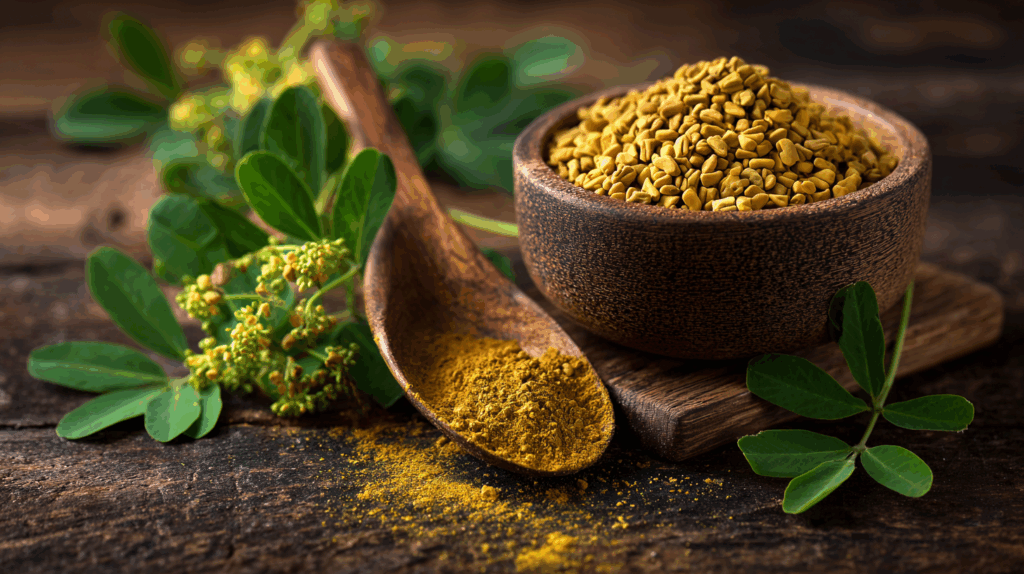
Some ingredients show up repeatedly in testosterone supplements. Fenugreek is one of them.
Early research suggests fenugreek may influence certain enzymes tied to hormone metabolism. In theory, that could increase free testosterone levels slightly. The key word there is slightly. Results vary, and the effect isn’t always consistent.
Then there’s tribulus terrestris. If you’ve spent any time around supplement stores, you’ve probably seen it.
Tribulus has been marketed as a testosterone enhancer for decades. Bodybuilders talked about it long before modern supplement companies pushed it online.
Here’s the uncomfortable part. Most controlled human studies show very little change in testosterone among healthy men.
That disconnect catches people off guard.
According to PubMed, evidence review of herbal testosterone supplements, reviews often show the same pattern: small effects, inconsistent results, and far less impact than marketing suggests.
Another detail rarely discussed is supplement quality.
Also, a Harvard study, supplement quality and third party testing report, shows that independent testing sometimes finds inaccurate labels or contamination in certain products. It’s not universal, but it happens often enough to raise eyebrows.
So do supplement-based Natural Testosterone Boosters work?
Sometimes. But rarely in isolation.
They tend to help more when the basics are already in place. Good sleep. Consistent training. Decent nutrition. Without those, the changes are usually subtle.
From experience, this is where expectations break down. People hope a capsule will compensate for habits that quietly suppress testosterone every day.
From Lifestyle Changes
Here’s where the conversation usually shifts.
The most effective Natural Testosterone Boosters rarely come from supplements. They come from lifestyle patterns.
Sleep sits near the top of that list.
Testosterone production peaks during deep sleep cycles, especially early in the morning. Cut sleep short for several nights and hormone levels drop faster than many people expect.
One study found healthy young men experienced a ten to fifteen percent testosterone reduction after just one week of restricted sleep.
Seven days.
That result surprises people.
Improving sleep quality often produces stronger hormonal effects than most supplement ingredients.
Body composition matters too. Excess body fat increases aromatase activity, an enzyme that converts testosterone into estrogen. As body fat rises, testosterone tends to fall.
Losing weight often reverses that shift.
Strength training plays another role.
Training, Stress, and the Lifestyle Side of It
If you watch how testosterone responds in real-world settings, lifestyle habits carry a lot of weight.
Resistance training sits near the top of that list. Heavy compound lifts like squats, deadlifts, and presses trigger temporary increases in testosterone after workouts. Not massive spikes. But enough to matter over time.
Consistency seems to matter more than intensity alone. People who train regularly tend to maintain healthier baseline hormone levels.
Short, demanding sessions often work better than long endurance workouts when testosterone is the goal.
Then stress enters the picture.
Chronic stress pushes cortisol levels upward. Cortisol and testosterone don’t cooperate well. When one climbs, the other often drops.
The solutions are rarely complicated. Walking outside. Taking breaks during the day. Stepping away from screens for a while. Small changes can reduce that stress load more than people expect.
Nutrition plays its part too.
Healthy fats support hormone production. Minerals such as zinc and vitamins like vitamin D help maintain normal testosterone function.
Extreme dieting can cause problems. Very low calorie plans or ultra low fat diets sometimes suppress hormone production without people realizing it.
So when conversations turn toward this, lifestyle habits almost always form the foundation.
Supplements, if they help at all, tend to work better once that foundation exists.
Supplements help more once those foundations exist.

The Most Promising Natural Ingredients Backed by Evidence
Not every supplement deserves the same level of skepticism. Some of it actually have research behind them. The results usually aren’t dramatic, though. More like gentle nudges than massive hormonal shifts.
Still, a few ingredients show up again and again in studies.
Ingredients That Actually Show Some Promise
Not every supplement ingredient deserves skepticism. A few of these have research behind them, even if the effects remain modest.
Ashwagandha
Ashwagandha often appears first in hormone discussions. Researchers have studied it in physically active men, particularly those lifting weights.
Some studies show moderate increases in testosterone along with improvements in recovery. The mechanism seems indirect. Ashwagandha appears to lower cortisol, the body’s primary stress hormone.
Lower cortisol can create a better hormonal environment for testosterone.
In real-world settings, people usually report improved sleep and recovery before anything else. The testosterone increase itself tends to be subtle.
Tongkat Ali
Tongkat ali, sometimes called Eurycoma longifolia, works through a slightly different pathway.
Instead of boosting testosterone production directly, it may influence how much testosterone remains available in the bloodstream. Some testosterone binds to proteins like sex hormone binding globulin. When that happens, it becomes less active.
Tongkat ali may reduce that binding slightly, allowing more free testosterone to circulate.
Results vary quite a bit. Some men notice increased energy or libido. Others report no noticeable changes.
That inconsistency is fairly common with it.
Vitamin D
Vitamin D often gets overlooked in testosterone conversations, which is strange given how frequently deficiencies appear.
Many men spend most of their time indoors. Office work. Screen time. Limited sunlight exposure. Low vitamin D levels often show up alongside reduced testosterone.
Correcting that deficiency sometimes improves hormone markers.
Not always. But often enough that clinicians routinely check vitamin D levels during hormone evaluations.
It’s less of a booster and more of a missing piece.
Zinc
Zinc plays a direct role in hormone production. Severe deficiency can significantly reduce testosterone levels.
Restore zinc levels and testosterone often rebounds.
What surprises people is how common mild deficiencies are. Diets heavy in processed foods frequently lack adequate mineral intake.
When zinc levels normalize, hormone balance sometimes follows.
Again, the effect tends to be corrective rather than dramatic. That pattern shows up repeatedly when discussing this.
Once again, the effect isn’t dramatic unless a deficiency exists. It tend to work best when they correct something that’s already off.
Magnesium
Magnesium sits quietly in the background of many metabolic processes. Muscle recovery, sleep quality, energy metabolism. Hormone regulation too.
Some research links magnesium status with healthier testosterone levels, particularly in physically active individuals. The effect is indirect. Better recovery. Better sleep. Less systemic stress.
Sometimes that’s enough to support hormone balance.
Here’s the key point most people miss. These ingredients rarely create dramatic testosterone spikes. They work better as supportive tools when the body already has a solid lifestyle foundation.
That expectation gap is where confusion often starts.
These ingredients rarely create massive testosterone increases. Instead, they help restore normal function when something is missing or slightly out of balance.
Most studies show modest improvements.
That doesn’t make supplements useless. It simply places them in the proper role. Supporting players, not miracle solutions.
Myths and Marketing Tricks in the Testosterone Industry
Spend enough time examining testosterone supplements and patterns start to appear.
The Natural Testosterone Boosters industry runs heavily on marketing language.
Labels promise “extreme hormone optimization” or “triple testosterone naturally.” Those statements grab attention. The fine print tells a different story.
One common strategy involves animal studies. An ingredient might increase testosterone in rodents. The supplement brand highlights that study, even if human research shows little change.
Another tactic revolves around dosage.
A scientific study might use several hundred milligrams of a plant extract. The supplement includes the ingredient but at a fraction of that amount. Most consumers never compare the numbers.
Proprietary blends create more confusion. They list ingredients without revealing their exact doses.
You see the ingredients. You just don’t know the amounts.
Occasionally stimulants sneak into formulas disguised as herbal extracts. The user feels energized and assumes testosterone increased.
In reality, it’s simply caffeine.
Marketing language also leans heavily on identity. Words like “alpha,” “primal,” or “dominance formula” appear frequently.
They sell a persona more than a physiological result.
Understanding these strategies helps people approach this with healthy skepticism.

When Low Testosterone Might Need Medical Help
Lifestyle changes and Natural Testosterone Boosters help a lot of men. But not every situation responds to those approaches.
Sometimes the problem runs deeper.
When testosterone levels drop far below normal ranges, medical evaluation becomes important. Clinics see this regularly. Men assume fatigue or low motivation is simply aging, then blood tests reveal something else.
Common symptoms show up in clusters. Persistent fatigue. Reduced libido. Loss of muscle mass. Higher body fat. Mood changes. Trouble concentrating.
None of those signs prove low testosterone by themselves. They overlap with stress, poor sleep, and other health issues. That’s why blood testing matters.
Doctors usually test testosterone early in the morning when levels peak naturally. If the first result looks low, the test is repeated on another day. Hormones fluctuate, so a single test rarely tells the full story.
If levels consistently remain low, treatment options enter the discussion.
Testosterone Replacement Therapy (TRT)
Testosterone replacement therapy, usually called TRT, can improve symptoms in men with confirmed hormone deficiency. Energy improves. Libido often returns. Muscle mass can increase again.
But TRT isn’t a casual decision.
Hormone therapy affects fertility and requires long term medical monitoring. Blood markers must be checked regularly to ensure safety. Most clinicians approach it carefully.
In real-world settings, doctors usually recommend addressing lifestyle factors first. Sleep improvement. Weight reduction. Resistance training. Stress control.
Those steps alone sometimes restore testosterone levels enough to avoid medical treatment.
When they don’t, TRT becomes part of the conversation.
Clinical guidelines, clinical guidelines for testosterone deficiency, explain when hormone therapy becomes appropriate.
Knowing when to seek medical guidance saves time and removes a lot of uncertainty.
To Finalize It!
So does it actually work?
The honest answer sits somewhere between yes and no.
Certain ingredients can help, especially when they correct a deficiency or reduce stress. Ashwagandha, tongkat ali, vitamin D, zinc. These show measurable effects in some situations.
But the biggest drivers of testosterone levels rarely come from supplements.
Sleep quality. Strength training. Body composition. Stress levels. Diet patterns. These shape hormone production far more than most capsules.
Think of supplements as supportive tools rather than solutions.
From experience, the men who see the strongest results don’t rely on one strategy. They build a routine. Consistent training. Better sleep habits. Smarter nutrition. Then they layer in targeted supplementation where it makes sense.
That combination usually works better than chasing the next trendy bottle of Natural Testosterone Boosters.
Read More: